Extend Medication Monitoring Into the Home

An elderly couple smiling and hugging each other indoors.

Home health teams work hard to support patients between visits, but medication issues often emerge when clinicians aren't present.

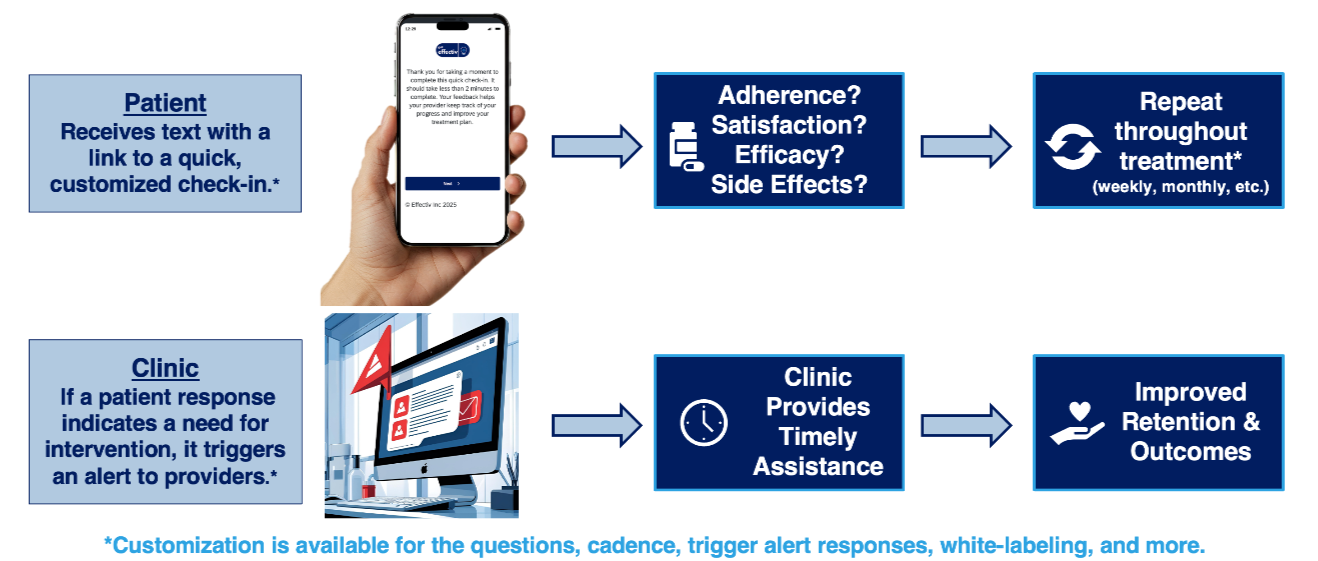
Effectiv helps organizations identify problems early through automated patient check-ins.

Patients at home frequently struggle with:

  • Side Effects

  • Medication Complexity

  • Adherence Challenges

  • Care Gaps

Providers may not learn about problems until the next visit.
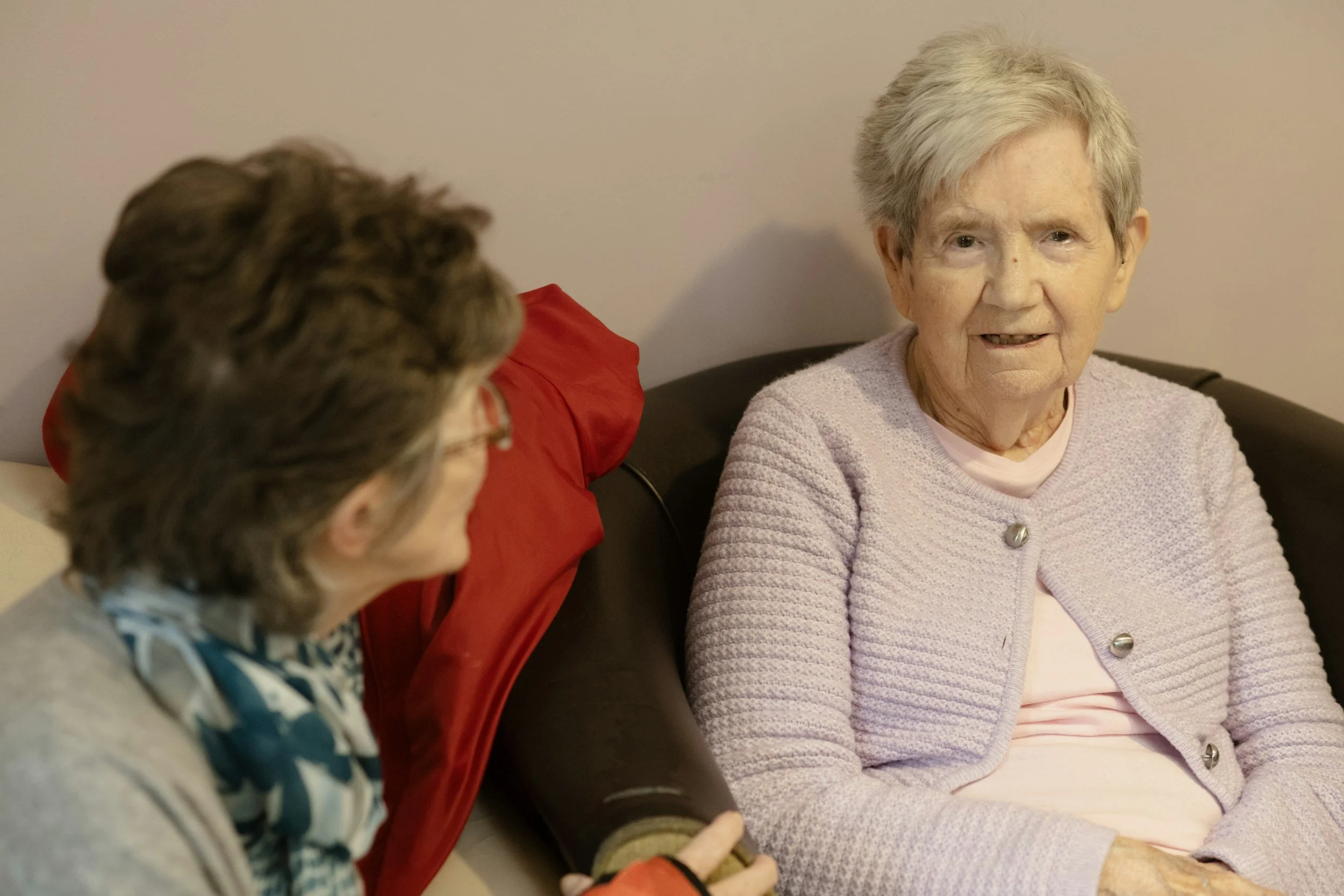
An elderly woman with short gray hair wearing a light purple cardigan and pink shirt, sitting on a black couch. She is engaged in conversation with a person whose face is partially visible, wearing glasses, a gray top, and a patterned scarf, with shoulder-length brown hair. They are indoors against a plain beige wall.

How Effectiv Helps

Monitor:

  • Adherence

  • Side effects

  • Treatment effectiveness

  • Patient-reported concerns

  • Care barriers

  • Social determinants of health

Automatically identify patients needing intervention.

Why Current Processes Aren’t Sufficient

Home health teams face:

  • Staffing shortages

  • High patient volumes

  • Limited follow-up capacity

Patient portals and phone calls rarely provide consistent engagement at the time it is needed.

An elderly man with white hair, wearing a plaid shirt and a vest, sitting on a sofa in a cozy living room, holding a light blue mug in one hand and looking at his smartphone with a smile.
Flowchart illustrating a telemedicine process with two pathways: one for patient check-in via mobile and one for clinic response. The patient pathway involves receiving a text, assessing adherence, satisfaction, efficacy, side effects, and repeating treatment as needed. The clinic pathway involves responding to alerts, providing timely assistance, and improving retention and outcomes.

Outcomes

Earlier Interventions

Better Care Coordination

Reduced Avoidable Utilization